Power supply repair and industrial power supply repair
Power supply repair is in demand particularly when electronic devices suddenly fail or no longer start after a voltage drop. The power supply unit or power supply converts the 230-volt mains voltage into a direct voltage or alternating voltage suitable for the respective device. Depending on the application, different types of power supplies are used, ranging from linear power supplies to modern switched-mode power supplies.
Typical causes of failure include defective components, unstable voltages, overheating or wear and tear due to ageing. In such cases, Mosertronik offers professional power supply repair. We work independently of the manufacturer, power class or device type.
Our repair service includes, among other things:
- Replacement of defective components such as MOSFETs, IGBTs or diodes
- Replacement of aged capacitors and other components
- Testing of protection functions, control and thermal behaviour
- Stress tests to ensure operational functionality
Even for power supplies that are no longer available or have been discontinued, repair is usually possible. Thanks to extensive experience and targeted component sourcing, Mosertronik offers a reliable and sustainable solution. In the following article, we show the difference between classic transformers and modern switched-mode power supplies and explain when each type of power supply is used.
Types of power supplies
There is a wide variety of different power supply topologies, which are used depending on the application and requirements. However, a fundamental distinction is made between two main types of power supplies: transformers and switched-mode power supplies. Both variants have their specific advantages and disadvantages and are used in different devices and environments.
Transformers as power supply units
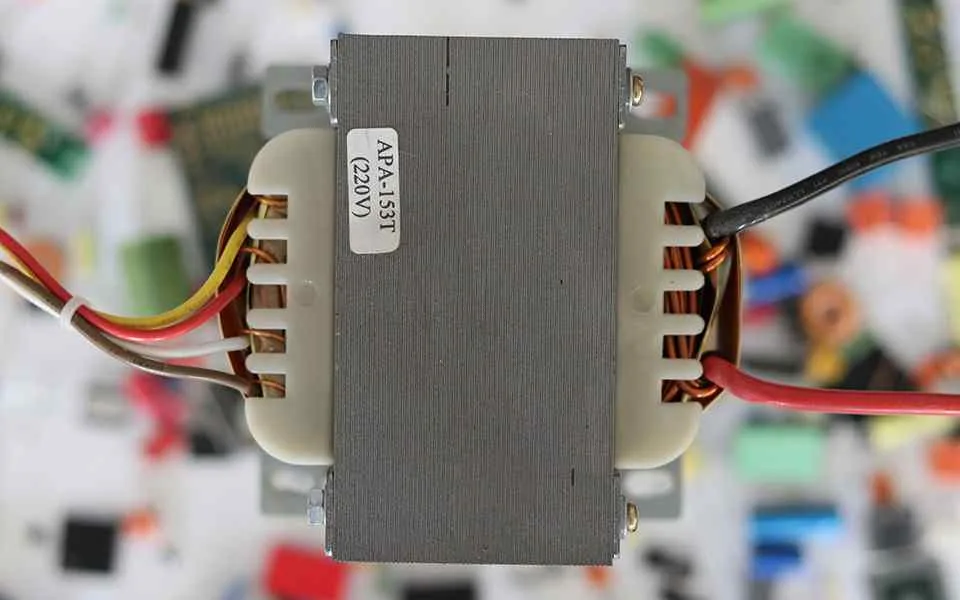
Transformers operate exclusively with alternating current and are used for voltage conversion through magnetic induction. They are available in numerous designs for different voltage ratios. Transformers were also used in power supply units for a long time, but have now been replaced in many areas by more efficient switched-mode power supplies. The output voltage of a transformer is always alternating voltage, which can then be converted into direct voltage using a rectifier.
Benefits of transformers
- very simple construction
- few components required
- low levels of electromagnetic radiation
Disadvantages of a transformer
- from a few hundred watts very large, heavy and expensive
- Output voltage difficult to adjust
- poor efficiency
Switched-mode power supplies (SMPS) as a power source
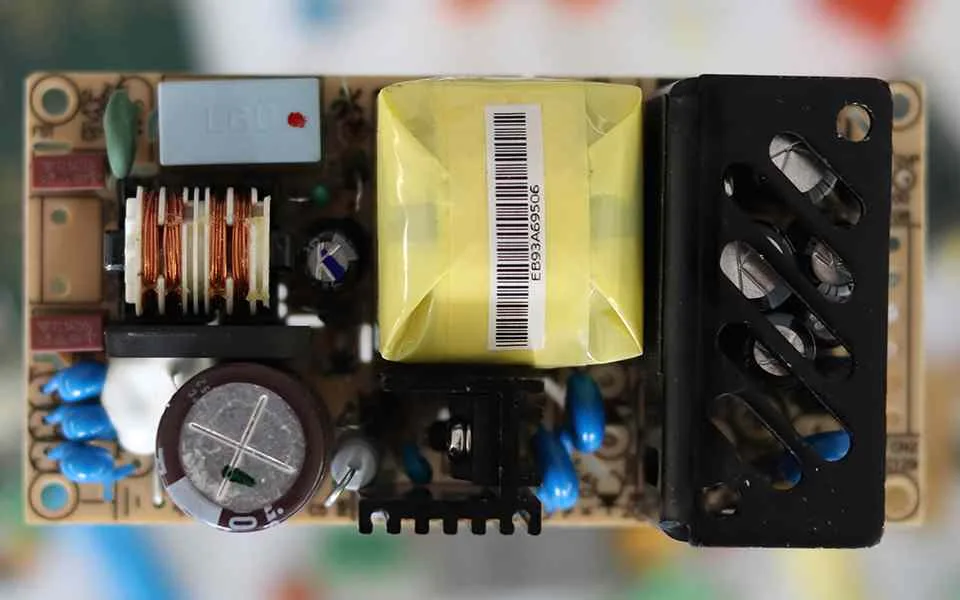
A transformer is also used in a switching power supply, albeit in a significantly more compact design and with a specialised configuration. The key difference lies in the high switching frequency, which is considerably higher than the mains frequency. Whilst conventional transformers operate at 50 or 60 hertz, the operating frequency of switching power supplies is typically in the kilohertz range, usually between 20 and several hundred kHz.
Due to this higher frequency, the transformer can be designed to be significantly smaller, which leads to a more compact and lighter construction. Depending on the circuit, switched-mode power supplies can be operated with either alternating voltage or direct voltage.
Advantages of SMPS
- small and light even with high performance
- Output voltage is easily adjustable
- high efficiency
Disadvantages of SMPS
- more components required
- expensive to develop
- higher electromagnetic emissions
Challenges in switch-mode power supply repairs
Repairing switching power supplies requires specialist expertise, as these assemblies are significantly more complex in design than traditional transformer-based solutions. The high switching frequency places particular demands on measurement technology, component selection and soldering techniques. Faults are often not immediately apparent and require in-depth analysis. Furthermore, many switching power supplies are sensitive to component tolerances and incorrect replacement parts, which makes repairs difficult without sound specialist knowledge. The thermal stress and ageing of components such as IGBTs, MOSFETs or optocouplers must also always be taken into account during fault-finding.
Faults and power supply repairs
The demands placed on power supplies are particularly high in the industrial sector. They must deliver precise output voltages under load, minimal residual ripple and a long service life. For this reason, we offer not just a simple Power supply unit repair, but a complete overhaul. This involves replacing all parts that have been subjected to particularly heavy wear and tear as a result of many years’ use. We use only high-quality components to restore the vehicle to the manufacturer’s original specifications.
Tests, examinations, measurements, test report
To ensure full functionality, every repaired power supply unit is thoroughly tested. This includes a functional check, a load test and a verification of the electrical parameters to ensure they comply with the specified tolerances. If required, the output voltages can be individually adjusted to suit the specific application. Even as part of a Power supply repair Every device is thoroughly tested to ensure the highest level of reliability.
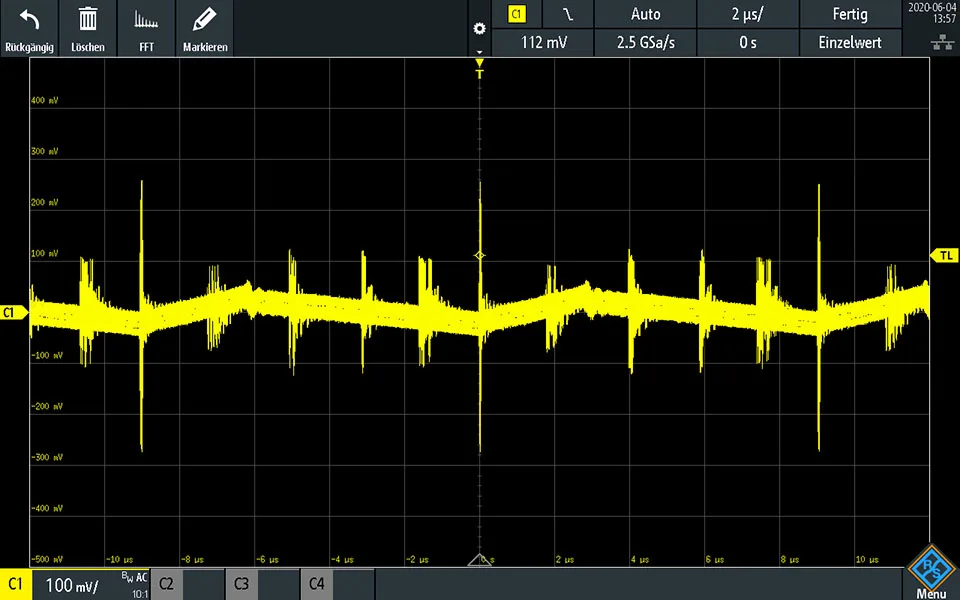
Upon request, we provide a detailed test report. This contains all relevant parameters such as apparent power, active power, output voltage, test current, efficiency, residual ripple and further measurement data. In the example shown, you can see a measurement of the Hum voltage without DC offset.