
Display and touchscreen repair
Visualisation, or the display, is becoming increasingly important in industry. With today's very complex machinery, it is advantageous for the operator to have a direct influence on the behaviour and settings of the machine. It is also essential that the operator is shown important information at a glance and can react accordingly. A range of digital display options is available for this purpose.
Different types of displays
There are many different digital displays. A large group of these is made up of screens. In the following section, we introduce a few of the most common display variations.
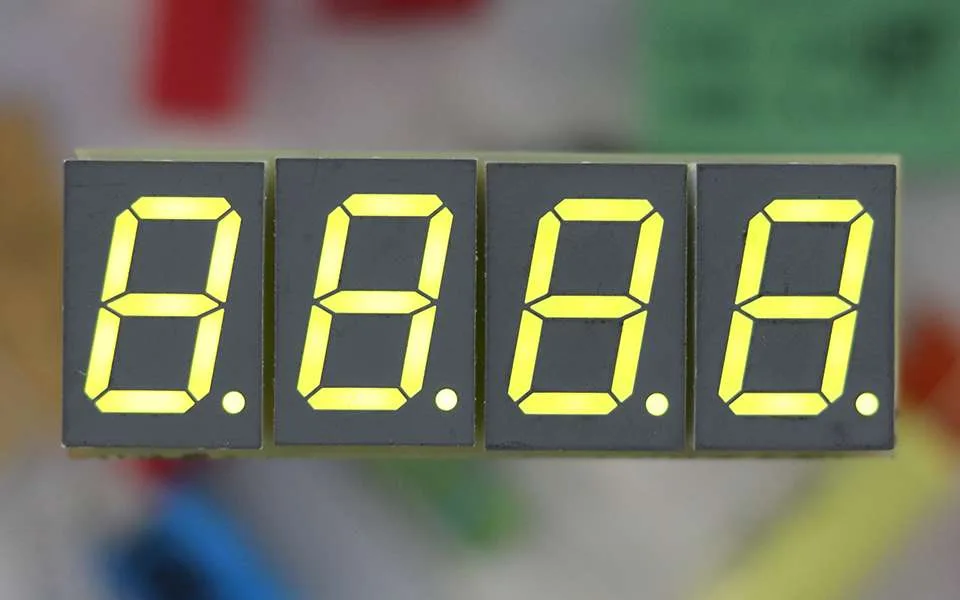
Seven-segment displays (numeric displays)
Seven-segment displays get their name from the fact that they have 7 segments available to display the numbers 0 to 9. If you arrange several of the individual displays next to each other, you can represent larger numbers. (This type of display is available in both LED and LCD versions.)
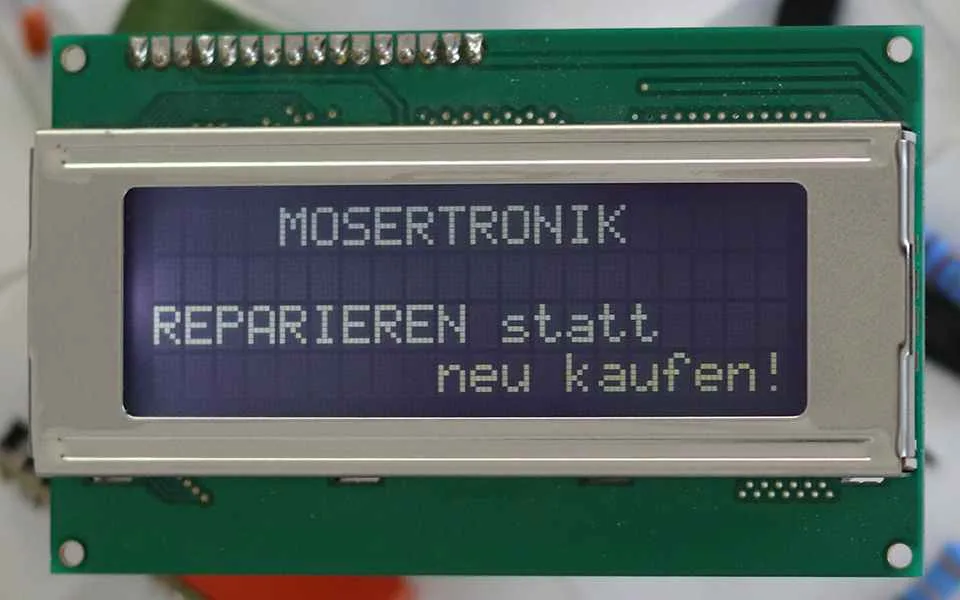
alphanumeric display
Alphanumeric displays can show both numbers and the complete Latin alphabet including special characters. These displays usually have small pixel grids of 5×8 pixels in which the characters are displayed.
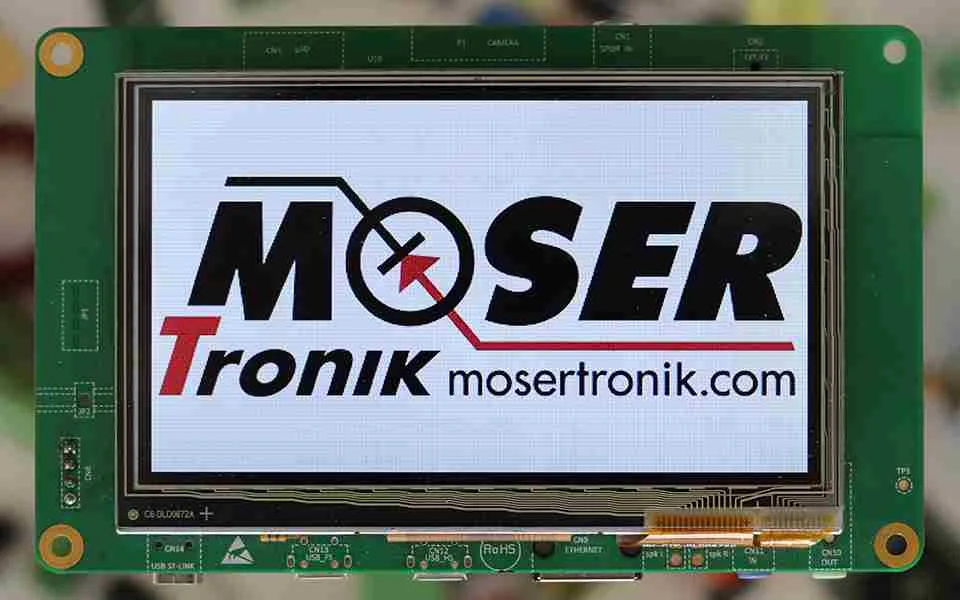
graphic displays (pixel displays)
Monochrome graphic displays can display any pattern regardless of their size (number of pixels). These are primarily used in areas where alphanumeric displays reach their limits. The major advantage is that they allow fonts and graphics to be brought onto a screen together.
Various techniques used in displays
Technologies such as LCD, LED, OLED and VFD are used in display technology, among others. A more detailed explanation can be found in the following paragraph.
LCD – Liquid Crystal Display
In German, LCD is translated as „Flüssigkristallanzeige“ (liquid crystal display). The display works using small crystals which, depending on the applied voltage, let light through or block it. You can find out more about it here experienced.
LED – Light Emitting Diode
LED means light-emitting diode in German. When a voltage is applied, the LED generates light through electroluminescence.
OLED – Organic Light Emitting Diode (H3)
The term OLED is translated into German as „Organische Licht aussende Diode“. They work similarly to an LED, only on an organic basis.
VFD – Vacuum Fluorescent Display
To German vacuum fluorescent display, some people also call it a digitron display. This is an electron tube where special materials are made to glow through the bombardment of electrons.
Display lighting
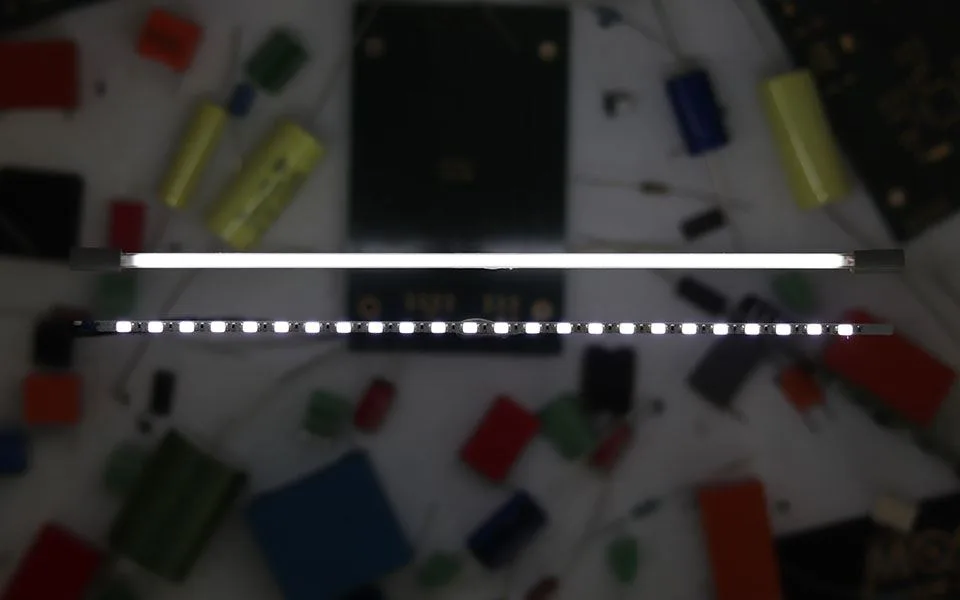
To ensure a clearly visible display, the screen itself must either emit light or be illuminated. Self-illuminating displays are always realised using LEDs or OLEDs. Normal LCDs, on the other hand, require a backlight. This backlight can be provided by LEDs or by a CCFL. Regardless of which illumination is used, a polarising filter must be placed between the display and the illumination.
LED lighting
With LED lighting, a distinction is made between two methods.
Direct-Light
The term Direct-Light translates to „direct illumination“ in English. Here, the LEDs are located directly behind the display and shine onto the polarisation filter.
Edge-Light
Translated into English, Edge-Light means „lateral illumination“. Here, the LEDs are located at the side of the display and are guided via a diffuser to the polarising filter and display.
CCFL lighting
The term CCFL stands in English for „Cold Cathode Fluorescent Lamp“. The CCFL is very similar in function to a fluorescent lamp, but requires a special control system. The CCFLs are always located at the side. The light is guided via a diffuser to the polarising filter.
Touchscreen as an HMI (Human Machine Interface)
A touchscreen as an HMI is necessary, because a display alone does not make a good interface. For a functional interface, an input option is required. In the past, this was achieved using a series of keypads. In order to enable easier operation, touch-sensitive screens, also known as touchscreens, are now used.
Most frequently used touchscreen systems
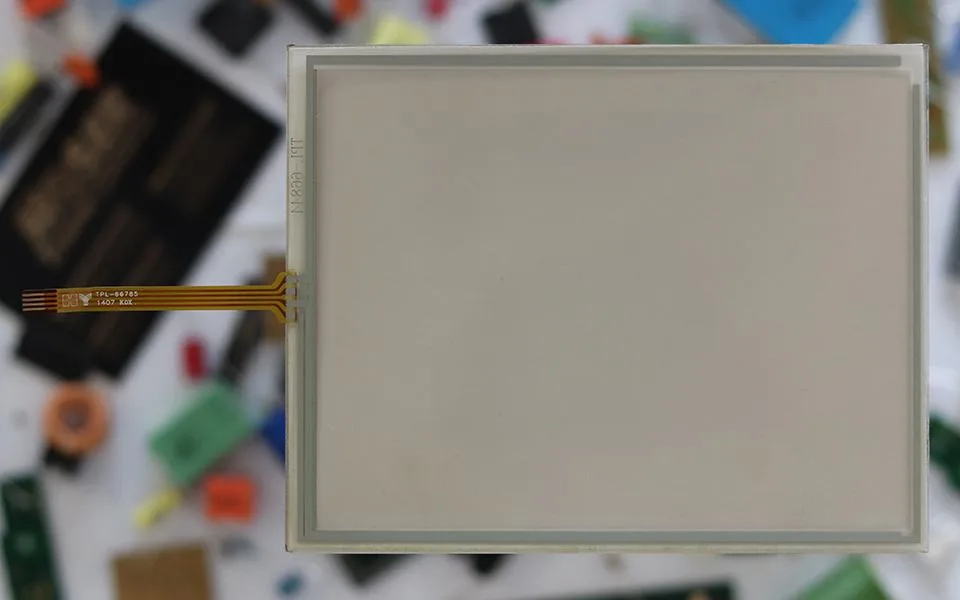
There are many different ways to implement a touchscreen. Below you will find the most common technologies. The image shows a resistive touch panel, which is currently the most widespread in the industrial and automotive sectors.
Resistive touchscreen
The resistive touchscreen works with two resistive plates which lie on top of each other with a small gap. By pressing the plates, they are connected and the electronics can calculate where the touch occurred through the newly created resistance.
capacitive touchscreen
By touching the capacitive touchscreen, you change the electrical field that is applied to the touchscreen. The electronics can use this change to calculate where the touch is taking place.
Optical touchscreen
For the optical touchscreen, a grid of infrared lasers is placed across the screen. As soon as an interruption of the laser beams is detected, the electronics can calculate where the finger is located.
Common mistakes in display and touchscreen repair
Due to the highly complex systems used in the visualisation, there is naturally a wide range of errors that can occur. We can help with many of these errors, a few examples of which can be found below.
Touchscreen not working
If the touchscreen no longer works properly, it can happen that touches are incorrectly detected or not recognised at all.
Backlight not working
Without proper backlighting, the display is very difficult to almost impossible to read. Furthermore, it can happen that the illumination is no longer uniform.
Complete failure of the visualisation
In the event of a total failure, neither the touch screen nor the buttons work, nor does the display show anything
Repair – apply now
If you want to have your LCD display repaired, you can do so now; for information, just look in the shop.